
Model guide · SDXL, Juggernaut XL, RealVisXL
Run SDXL on a Mac
DiffusionBear runs SDXL and its derivatives on Apple Silicon with its own native MLX engine, in a free MIT-licensed Mac app. On an M1 with 16 GB, Juggernaut XL Lightning generates a 512×768 image in about 8 seconds. Custom .safetensors checkpoints from Civitai work too.
The short answer
Juggernaut XL Lightning, 4-bit, 512×768, four steps. On a 16 GB M1, it is the fastest SDXL model in DiffusionBear: a median 8.19 seconds per image across ten portrait prompts. For more detail, RealVisXL V5.0 and Juggernaut XI run eight Hyper-SD steps in about 36 seconds.
DiffusionBear does not wrap a Python SDXL pipeline: the MLX UNet, dual CLIP encoders, VAE decoder, schedulers, LoRA stack and TAESD are rewritten for Apple Silicon, so the app needs no PyTorch.
What it looks like in DiffusionBear
Pick an SDXL model in the model picker of the Generate tab, type a prompt, and generate. Everything runs on the Mac's own GPU; no account and no cloud.

SDXL examples generated on an M1 Mac
Three real outputs from the benchmark, one per bundled SDXL checkpoint.
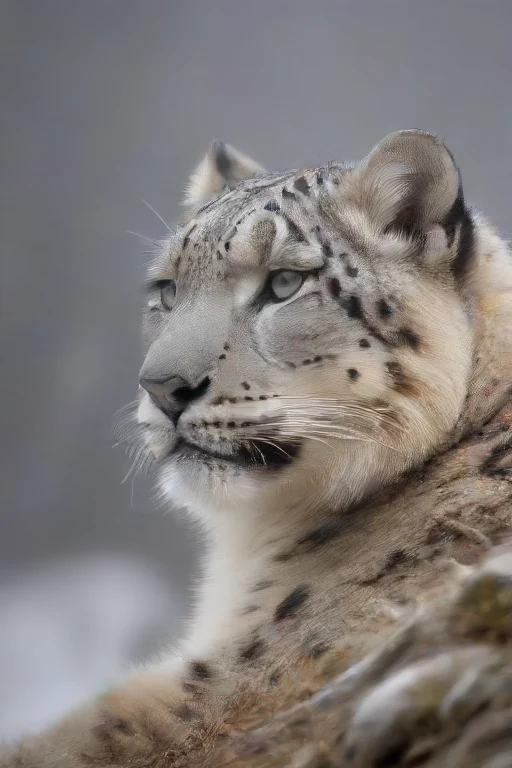
512×768 · 4 steps · 4-bit · seed 1004 · 8.19 s on M1 16 GB

512×768 · 8 steps · 4-bit · seed 1002 · 38.12 s on M1 16 GB

512×768 · 8 steps · 4-bit · seed 1007 · 35.76 s on M1 16 GB
Which SDXL model to pick
Every bundled SDXL model, measured on the same M1 with the same ten prompts.
| Model | Steps | Measured median | Use it when |
|---|---|---|---|
| Juggernaut XL Lightning | 4 | 8.19 s | You want fast photoreal drafts. |
| RealVisXL V5.0 Lightning | 6 | 11.98 s | You want a different photoreal look at Lightning speed. |
| Juggernaut XI v11 (Hyper-SD) | 8 | 35.97 s | You want more detail and prompt adherence. |
| RealVisXL V5.0 (Hyper-SD) | 8 | 36.18 s | You want RealVis detail and accept 36 s per image. |
SDXL on which Mac?
SDXL is the lightest model family in DiffusionBear.
| Unified memory | Fit | Notes |
|---|---|---|
| 8 GB | Not supported | Below the 16 GB recommendation. |
| 16 GB (M1, measured) | Recommended · 8.2 s (Lightning) | Benchmarked configuration for SDXL. Close memory-heavy apps first. |
| 24 GB and more | More headroom | Room for larger frames and LoRA stacks. Timings not measured. |
How to run SDXL on your Mac
- Download DiffusionBear v0.5.1 and move it to Applications (see install & Gatekeeper).
- Open the Models tab and download Juggernaut XL Lightning, or import your own SDXL .safetensors checkpoint.
- In the Generate tab, pick the model, keep 4-bit, set 512×768 and the model's step count (4 for Lightning, 8 for Hyper-SD).
- Add a negative prompt or SDXL LoRAs if you need them, then generate.
SDXL on Mac FAQ
Can I run SDXL on a Mac?
Yes. DiffusionBear runs SDXL natively on Apple Silicon with its own MLX engine: UNet, dual CLIP encoders, VAE, schedulers, LoRAs and 4/8-bit quantization. It ships Juggernaut XL Lightning, RealVisXL V5.0 and Juggernaut XI, and converts custom SDXL .safetensors checkpoints.
How fast is SDXL on an M1 Mac?
In the DiffusionBear v0.5.1 benchmark on an M1 with 16 GB at 512x768, the median was 8.19 seconds for Juggernaut XL Lightning (4 steps), 11.98 seconds for RealVisXL V5.0 Lightning (6 steps), 35.97 seconds for Juggernaut XI v11 and 36.18 seconds for RealVisXL V5.0 (8 Hyper-SD steps). Other chips have not been measured.
Does SDXL work on a MacBook Air or Mac mini?
Any Apple Silicon Mac from M1 to M6 with macOS 26.2 or later can run the app. 16 GB of unified memory is the recommended floor; 8 GB is not supported. Speed has only been measured on an M1 with 16 GB.
Should I use 4-bit or 8-bit SDXL on a 16 GB Mac?
Use 4-bit. On a 16 GB M1, 8-bit SDXL is dramatically slower than 4-bit because it competes with macOS for unified memory.
Can I use Civitai SDXL checkpoints and LoRAs on a Mac?
Yes. DiffusionBear auto-converts custom SDXL .safetensors checkpoints and loads SDXL LoRAs, with negative prompts, a sampler picker, CLIP Skip, DeepCache and TAESD fast decode.